The book / In the making
How to Know
Which Idea
to Pursue
We’re bringing more than ten years of Conversation-Based Learning practice into a book, including how AI helps you prepare learning conversations and analyse what customers tell you, so you can make better-informed decisions about your ideas.
Explore what’s inside Know when pre-orders open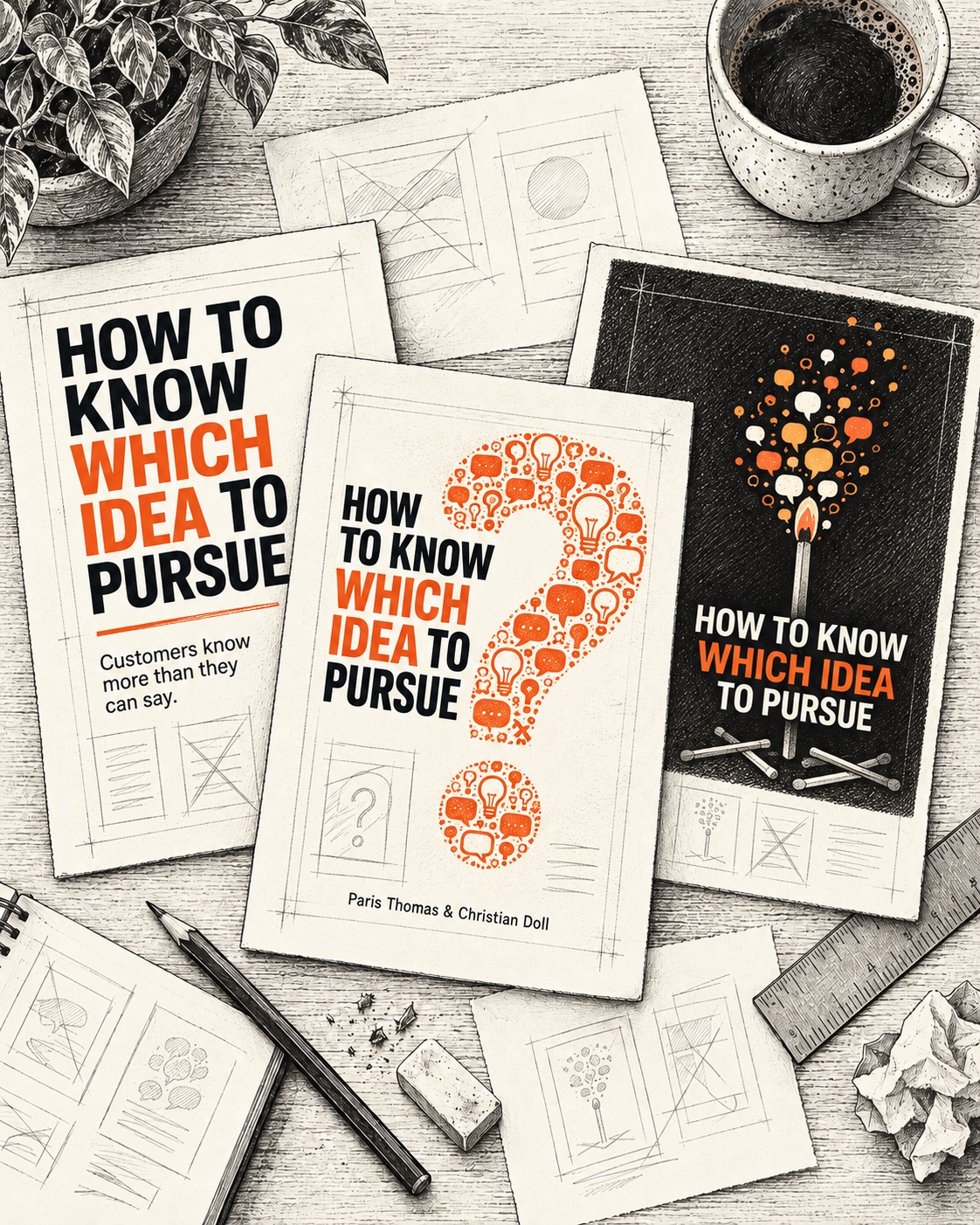
Inside the book
From
“what if?”
to “what now?”
Five acts. One complete method.
A practical journey from your first assumption to an evidence-based decision.
See the work.
01WhyThe case for evidence
What if building is the expensive way to learn?
Start with customer understanding. Learn why to test desirability early, keep challenging assumptions and talk to customers before committing to a build.
Chapters 1–3 / Customers, continuous learning & conversations
02How / PreparationSet up the learning
What do you need to learn, and from whom?
Draft customer profiles and Need Bundles of jobs, pains and gains. Use AI to help develop offering ideas, rough Customer Value Scenes and pricing models that customers can challenge.
Chapter 4 / Preparing for learning conversations
03How / ExecutionHave the conversation
Can you listen without trying to win?
Invite customers to correct your view of their needs. Explore reactions to Customer Value Scenes and pricing, ask for the reasons, and preserve their words. Prepare your team and practice with AI where appropriate.
Chapter 5 / Learning conversation execution
04What nowMake the idea decision
What does the evidence let you say?
Prepare conversation records for analysis, use AI to examine customer grouping, needs and offering ideas in order, and review the interpretations against the source material. Build a Decision Brief that connects recommendations to evidence, pricing feedback and the larger business idea.
Chapters 6–7 / Analysis & idea decisions
05BeyondMake it a practice
How does your next project get better?
Explore how to embed CBL in your organization, use technology thoughtfully and learn from practitioner stories.
Chapters 8–10 / Scale, stories & what comes next
AI in the method
Learn faster.
Handle customer information
with care.
Paris and Christian have used CBL with clients for more than ten years. While writing with fellow practitioners, we’re applying and refining these improvements in client work.
“In our client work, preparation and analysis that used to take months can now take weeks.”Paris Thomas and Christian Doll
What you’ll learn to do
- Prepare a useful first draft.
Use structured prompts and skills to develop customer assumptions and rough offering scenes. Your team reviews the drafts and brings them to real customers to question.
- Agree how conversation data will be handled.
Choose transcription and AI tools approved for your project, including restricted environments where required. Agree confidentiality, participant permissions, access and retention before recording or sharing material.
- Separate identity from the learning.
Replace or remove identifying details before using records in AI analysis. Keep any identity mapping separately with restricted access. This practice, called pseudonymization, reduces identification risk; it does not make every record anonymous or replace your organisation’s policies and applicable data-protection requirements, including GDPR where it applies.
- Check the analysis against the conversations.
AI helps organise the records and examine patterns. People review the interpretation, preserve uncertainty and contradictions, and follow findings back to the original material before making a decision.
The book explains the method. Alongside it, we’re developing prompts and skills to help you apply it. CBL Studio is our next step: bringing preparation, conversation records, analysis and decisions into one connected workspace. The resources and software are evolving; Studio is coming soon.
The CBL Masterclass
Put the book’s
method to work.
In the Masterclass, we’ll help you put the book’s method to work on your own project. Practise AI-assisted preparation and analysis, inviting customer corrections, and handling conversation data responsibly.
Register your interestLearn with Paris Thomas and Christian Doll.
Team workshops now. Open class dates coming later.
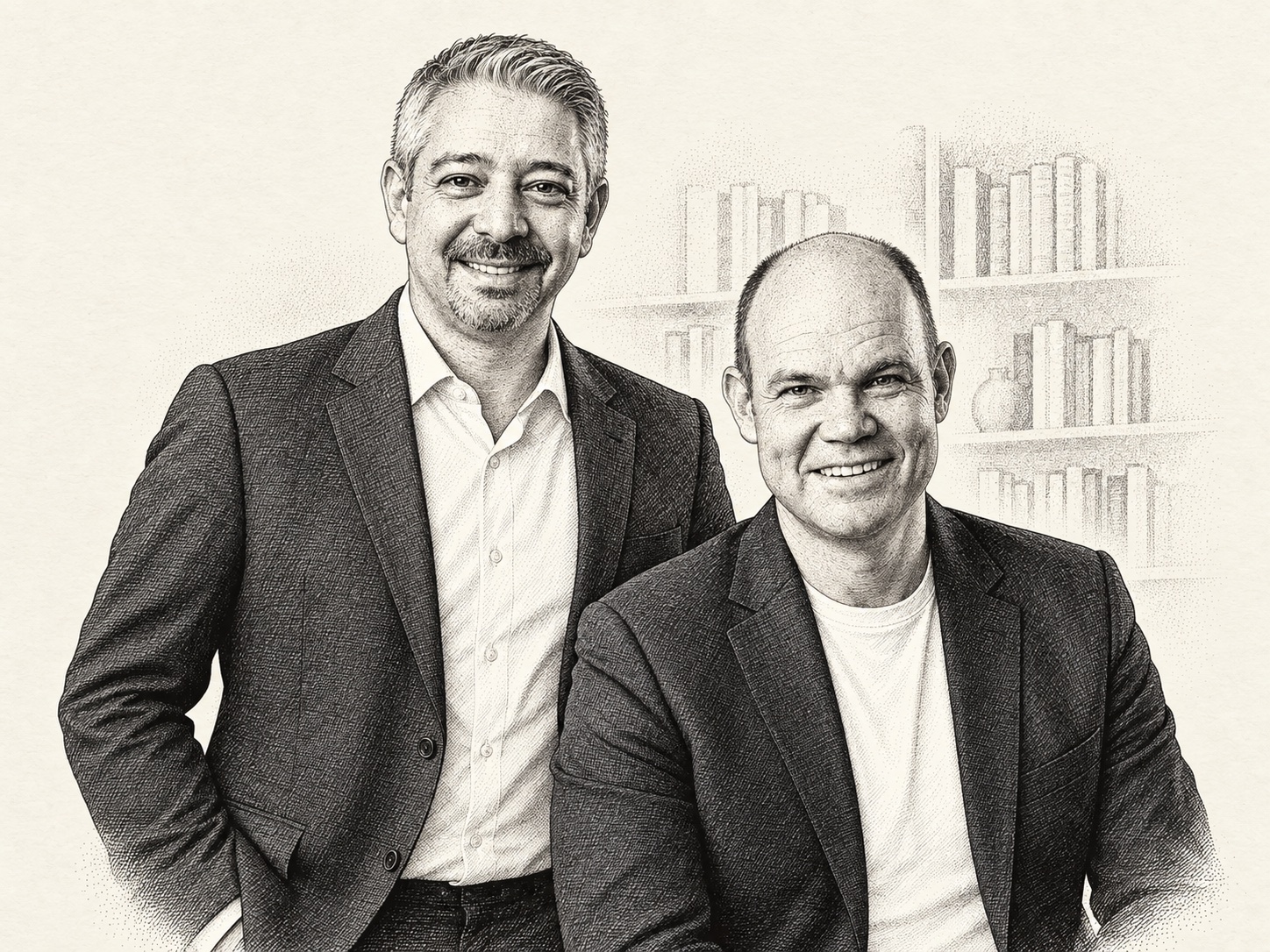
Meet the authors
Meet Paris and Christian, the people behind CBL.
Paris Thomas and Christian Doll created the CBL method to help teams turn customer conversations into better idea decisions. This book brings that practice to your desk.
100+
practitioners contributed
And a much bigger conversation
Even a book about learning
needs to listen.
Product managers, consultants, innovation leaders and founders have shaped this book with feedback, stories and experience from their own projects.
Written by two. Sharpened by many.
The next chapter is yours
Great idea.
Let’s find
out.
You don’t have to have all the answers.
Start by testing the assumptions behind your idea.
Know when
pre-orders open.
Leave your email and we’ll let you know as soon as How to Know Which Idea to Pursue is available to pre-order.
We’ll email you when pre-orders open. No payment or commitment. Unsubscribe anytime. Privacy