A research interview
Understand someone’s experiences, circumstances and needs.
You believe in your idea.
Understand what your customers need before you build.
“This could be huge.”



Use the arrow or choose a perspective. Illustrative dialogue.
Why we created CBL
In a customer interview, someone may feel comfortable answering your questions but less comfortable telling you that you’ve misunderstood their situation.
We created Conversation-Based Learning to make that challenge easier. Customers can question what we think, explain what matters to them, and help us see what needs to change before we decide which idea to pursue.
See what happens in a conversation
We ask about
her experience.
From answering our questions
to correcting our thinking.
The learning conversation
We bring a rough picture of their situation and how our idea might help. We explain that it contains our assumptions, and invite them to change it: “What have we misunderstood?”
The picture gives us something concrete to explore together. Customers can correct it, explain their reasons, and show us what we’ve missed. We compare those reasons across customers before making a decision.

She shows us what we’ve misunderstood.
“Get this done faster.”
“I need to know
who I can trust.”
Illustrative dialogue. We compare learning across customers before drawing conclusions.
Take a closer look
Open a page to explore the purpose, the invitation and the way we learn.
A research interview
Understand someone’s experiences, circumstances and needs.
A CBL learning conversation
Explore customer needs and possible offerings to inform a decision about your idea.
A research interview
“I’d like to ask you about how you handle this today.”
A CBL learning conversation
“Here’s what we think your situation looks like. What have we misunderstood?”
A research interview
Open questions and follow-up questions that explore their experience.
A CBL learning conversation
A prepared picture of their needs, followed by offering ideas they can question and correct. We explore the reasons behind their responses.
Good interviews can be open and relaxed too. CBL brings preparation, customer conversations and analysis together in a defined process for deciding what to pursue.
CBL, supported by AI
We’ve been using Conversation-Based Learning with clients for more than ten years. As we write this book with fellow practitioners, we’re testing and refining how AI supports the method, from preparing what we show customers to organising conversation records and examining patterns across them.
AI helps with the work. Your team checks the interpretation, follows it back to what customers actually said, and decides what to do next.
Customer assumptions
and rough offering ideas.
“I need to know who I can trust.”
Your team checks this interpretation against the conversation, then looks for supporting and conflicting reasons across customers.
Illustrative material. Open the finding to follow it back to the customer.
Working with customer conversations also means deciding carefully how their information is recorded, shared and processed. How we work with AI and confidential data
From one conversation to a clearer decision
Explore how customer corrections and the reasons behind them change an idea.Play the journey
A fictional daytime dog-care service. Choose a step to follow the learning.
Fictional example / Weekday dog care
Choose a step, or use the next arrow
Dots are offering ideas, not scores. All accounts are fictional.
01 / The discovery journey
Use AI to draft customer assumptions and the material you’ll bring to the conversation. These are starting ideas for customers to correct.
Compare customer groups, then needs, then offerings. Keep differences and counterexamples visible. People decide what to pursue, revise or park. Desirability alone does not prove a business will succeed.

A closer look / A fictional conversation
Follow her conversation, from our first assumptions to a revised offering.
Go deeper with the book’s method
Learn with Paris Thomas and Christian Doll
Bring a customer-facing idea and the decision your team needs to make. We’ll guide you through CBL with AI, from preparing a learning conversation to making sense of what customers tell you and handling their information responsibly.
Use AI to prepare a first picture that a customer can question.
Practise conversations that uncover the reasons behind a response.
Review AI-assisted analysis and connect customer evidence to what you pursue, change or set aside.
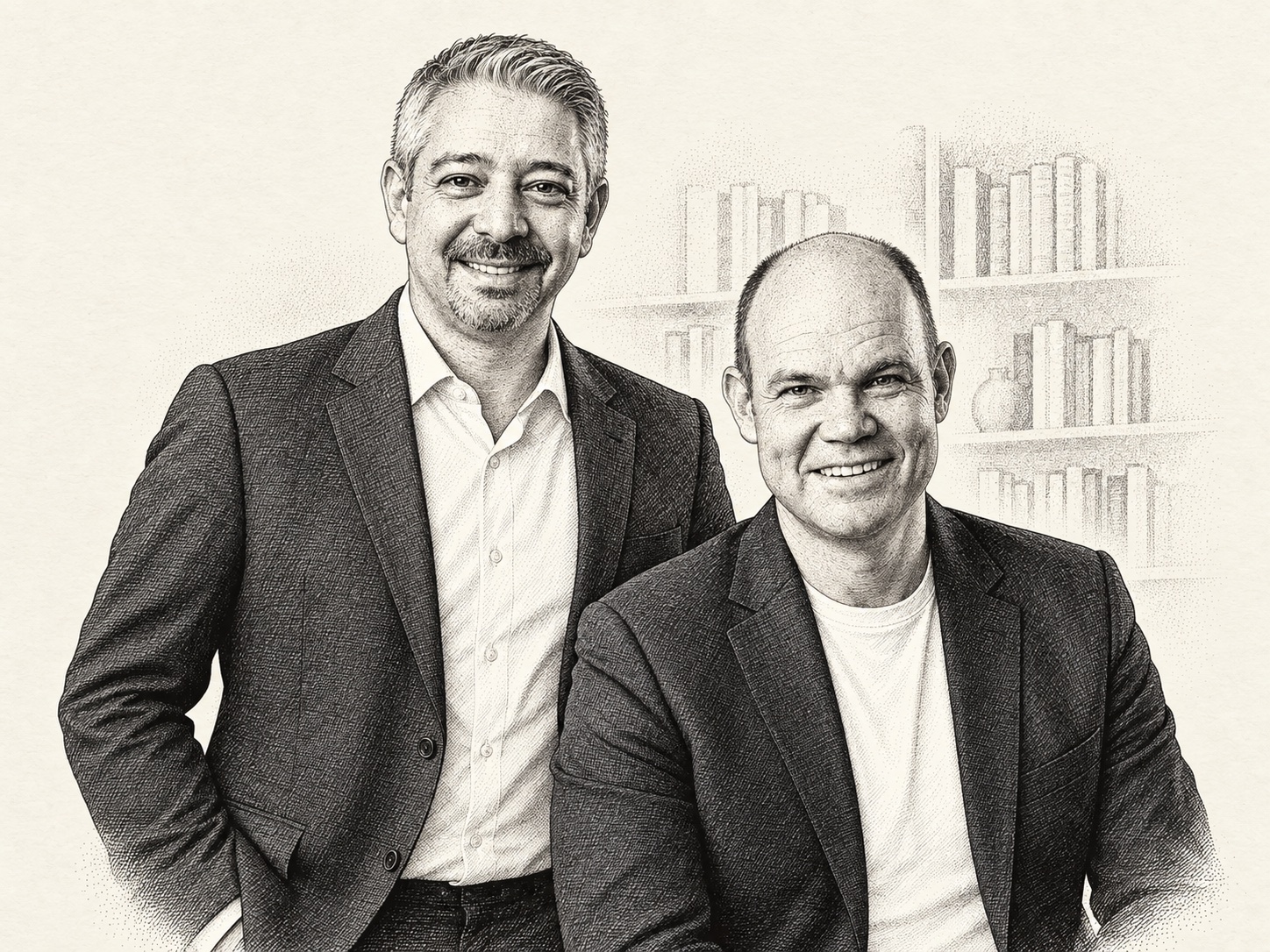
Meet the authors
Paris Thomas and Christian Doll created Conversation-Based Learning. More than 100 practitioners have helped shape the book through feedback, stories and experience.
A few practical questions
CBL helps teams investigate new business ideas, product and service improvements, pricing models, and ways of reaching or serving customers. Start with a concrete decision: which customers to focus on, which offerings to pursue, or how to improve an idea before investing further. It works with both business customers and consumers.
Customer interviews can be open, flexible and exploratory. CBL builds on customer-learning practice with a defined process for exploring needs and offering ideas, then comparing the reasons across customers. It makes your assumptions explicit and invites customers to correct them. You prepare customer profiles, related jobs, pains and gains in Need Bundles, and rough scenes showing an offering's proposed value. Conversations and systematic analysis connect those corrections to recommendations. The point is to understand why an offering meets a real need, with reasons your team can examine.
CBL builds evidence of desirability: which customers value an offering, why, and what shapes their willingness to pay. That is a crucial part of the decision. Technical feasibility, commercial viability and the size of the opportunity need additional work. A positive conversation is not a purchase, and a strong desirability finding is not a guarantee of business success.
The next chapter is yours
You don’t have to have all the answers.
Start by testing the assumptions behind your idea.
Leave your email and we’ll let you know as soon as How to Know Which Idea to Pursue is available to pre-order.
We’ll email you when pre-orders open. No payment or commitment. Unsubscribe anytime. Privacy